Nederlands

Mixing and Mastering Plugins: The Professional’s Guide to Digital Signal Processing in 2026
What if the secret to a radio-ready master in 2026 isn’t adding more processing, but stripping your signal chain down to its most essential components? It’s a common frustration for engineers to feel buried under hundreds of VST and AAX licenses while their CPU struggles to keep up with high-sample-rate sessions. You want results, not a folder full of digital clutter that consumes your processing power and your budget. Managing multiple software tiers and complex licensing often feels like a technical chore rather than a creative process.
This guide will show you how to select and implement professional mastering plugins to achieve studio-grade results within your DAW. We’ll focus on tools that offer the highest return on investment and provide the stability required for complex projects. You’ll learn how to build a streamlined, professional-sounding mix without the distraction of marketing hype. We’ll examine the shift toward AI-assisted DSP, the necessity of CPU-efficient workflows, and which specific software suites actually justify their price tags in a professional environment. By the end of this article, you’ll have a clear framework for optimizing your digital signal processing for maximum efficiency and sonic clarity.
Key Takeaways
- Understand the technical distinction between transparent digital precision and character-driven analog emulations to select the right tool for every session.
- Learn a structured approach to subtractive EQ and serial compression to eliminate frequency masking and stabilize your dynamic range.
- Discover how to implement professional mastering plugins to achieve competitive loudness while preserving critical transient detail and sonic clarity.
- Verify software compatibility across platforms like Pro Tools and eMotion LV1 to ensure session stability and high CPU efficiency in demanding environments.
- Centralize your audio software license management through an authorized reseller to improve studio security and streamline administrative workflows.
The Evolution of Digital Signal Processing in 2026
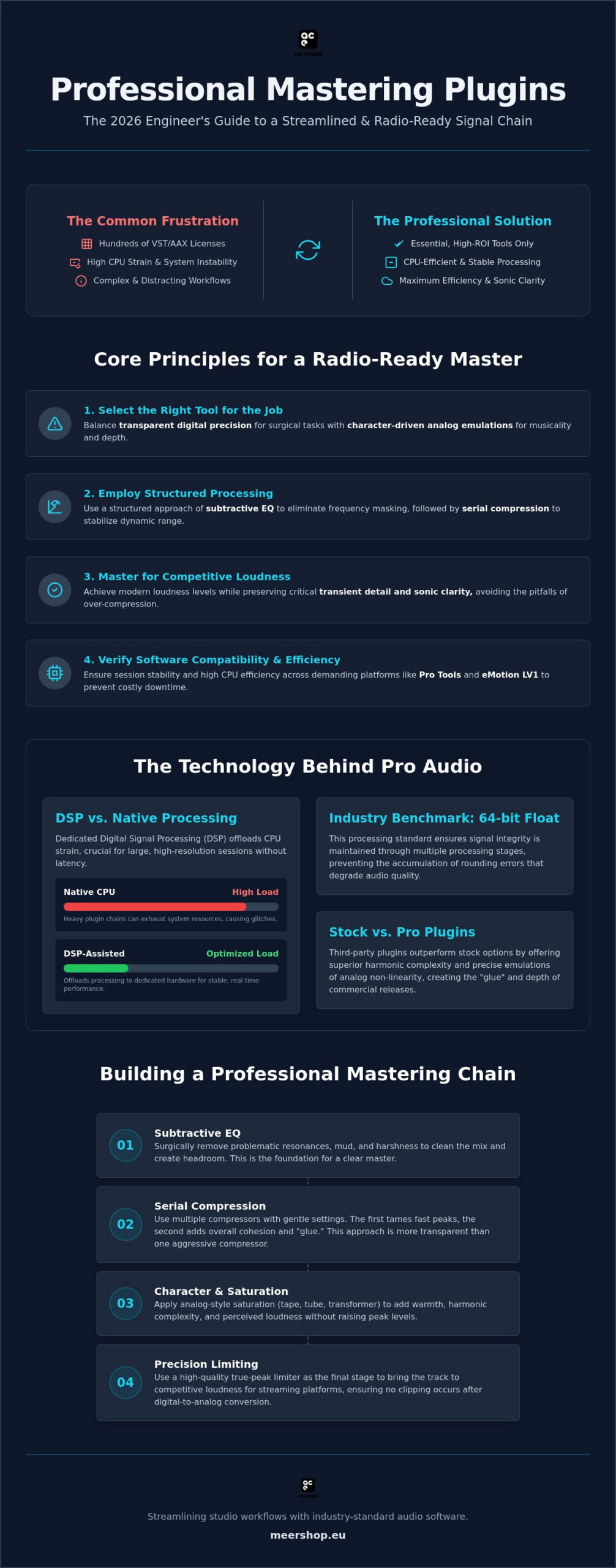
High-precision plugins are the backbone of the modern studio ecosystem. By 2026, the 64-bit float processing standard has become the industry benchmark, ensuring that signal integrity remains intact even through multiple stages of heavy processing. This architecture prevents the accumulation of rounding errors that can degrade audio quality during complex Mastering (audio) workflows. The shift from hardware-only setups to sophisticated digital signal processing (DSP) emulations is driven by the need for total recall, lower noise floors, and the ability to run multiple instances of legendary processors without physical space constraints. Modern production environments rely on these high-precision tools to handle the surgical tasks required for high-resolution audio delivery across global streaming platforms.
Third-party professional mastering plugins consistently outperform standard DAW stock options by offering superior harmonic complexity. While stock plugins provide functional utility, they often fail to replicate the non-linear response of analog components. Specialized DSP developers focus on modeling the subtle saturation and phase characteristics of physical transformers and vacuum tubes. These nuances create the “glue” and depth expected in high-end commercial releases. Relying on professional-grade tools ensures that your signal chain maintains the resolution required for modern broadcast standards. This technical depth is what separates a sterile digital mix from a production that feels expensive and established.
DSP vs. Native Processing: What Every Engineer Needs to Know
Professional environments often utilize dedicated DSP to offload CPU strain during large sessions. This is essential when working in high-resolution formats where plugin counts can exhaust native system resources in applications like Pro Tools Ultimate. Digital Signal Processing (DSP) in modern VST or AAX architecture is the specialized application of mathematical operations to audio data to achieve real-time signal modification without latency. High sample rates and oversampling modes further enhance performance by moving aliasing artifacts beyond the audible range. This technical overhead maintains clarity in the high-frequency spectrum during heavy limiting.
The Role of Professional Hardware Emulations
Engineers continue to rely on the “Oxford” sound and classic console emulations because these tools provide a predictable, musical response. The Sonnox Vocal Production Bundle demonstrates how digital precision can be combined with intuitive, traditional control. The psychology of a visual interface that mimics physical outboard gear helps engineers make faster, more confident decisions based on established studio workflows. Achieving a professional result requires a balance between clinical digital transparency and the desirable coloration provided by analog-style saturation. Using these emulations allows for a hybrid approach that leverages digital efficiency and analog character.
Criteria for Selecting Professional Mixing and Mastering Plugins
Selecting software for a commercial studio requires a balance between technical transparency and aesthetic character. For surgical tasks, you need tools with high-bit-depth processing and minimal phase distortion. For creative tasks, character-driven coloration adds the depth and harmonic richness found in vintage hardware. High-end professional mastering plugins must provide both options, allowing you to switch between clinical accuracy and musical saturation depending on the project’s needs. Reliability is the primary metric here; a plugin that sounds excellent but causes session crashes is a liability in a professional environment.
Longevity is another critical factor for studio security. You shouldn’t invest in licenses from developers who lack a consistent history of software updates. Checking compatibility across major platforms like Pro Tools and eMotion LV1 ensures your sessions remain stable during high-pressure tracking or mixing. Understanding how DSP affects audio at a fundamental level helps you identify which tools offer genuine technical advantages rather than just polished visual interfaces. You can find a curated selection of these industry-standard tools in our authorized professional software catalog.
Compatibility and System Requirements
Verifying AAX, VST3, and AU support for your specific operating system is the first step in any procurement process. Low-latency performance is essential for live mixing applications where even a few milliseconds of delay can disrupt a performance. Modern studios often use specialized hosting solutions to maintain session stability. For example, Vienna Ensemble Pro 8 manages plugin hosting efficiency by offloading processing to secondary machines, which preserves the primary workstation’s CPU for critical DAW tasks.
Bundle Value Analysis
Calculating the per-plugin cost of professional production suites helps in managing a commercial studio budget. While individual boutique licenses offer specific textures, comprehensive bundles usually provide better long-term value. Focused collections like the Sonnox Vocal Production Bundle are essential for specialists who need a dedicated set of high-precision tools for a specific task. Identifying which tools are essential for your daily workflow versus those that are occasional utilities is key to maintaining a lean and efficient digital environment. Engineers based in the Netherlands looking to make informed purchasing decisions should consult our comprehensive guide to audio plugins kopen Nederland, which covers licensing landscapes, VAT-compliant procurement, and CPU-efficient tool selection for professional studios.
Building a Professional Mixing Chain: A Step-by-Step Guide
A professional signal chain is built on a foundation of logical, incremental improvements. Instead of reaching for creative effects immediately, an engineer must first address technical deficiencies in the raw audio. This methodical approach ensures that each subsequent processor in the chain operates on a clean, controlled signal. By following a structured workflow, you minimize the risk of over-processing and maintain the sonic integrity of the original recording.
- Step 1: Subtractive EQ. Use high-precision linear phase EQs to remove frequency masking and technical flaws. Cut unwanted low-end rumble and identify resonant peaks that conflict with other instruments. Cleaning the signal here prevents compressors from reacting to frequencies that shouldn’t be there.
- Step 2: Dynamic Control. Implement serial compression to stabilize the signal. Start with a transparent compressor to catch the highest peaks, followed by a slower, character-based unit for overall leveling. Many professional mastering plugins are effective here when applied to the mix bus for cohesive control.
- Step 3: Creating Depth and Space. Apply high-resolution spatial processors to position elements within the stereo field. Use short delays and plate reverbs to create a sense of environment without washing out the mix’s clarity.
- Step 4: Tonal Shaping. Finish the chain with harmonic enhancement. Add subtle saturation or “air” EQs to provide character and a finished, commercial sheen to the track.
Advanced Vocal Processing Techniques
Transparent vocal clarity requires the surgical use of specialized de-essers and dynamic EQs. These tools address sibilance and harshness only when they exceed a specific threshold, preserving the natural tone of the performance. Integrating the Sonnox Vocal Production Bundle allows you to access industry-standard algorithms that define the modern radio-ready sound. Parallel vocal compression allows you to retain the original performance’s natural dynamics while adding consistent weight and presence to the track. For a comprehensive breakdown of corrective and character-driven tools, review our guide to the beste vocal processing plugins for professional engineers in 2026.
Managing Complex Instrumentation
High-track-count orchestral projects, such as those using the Eastwest Hollywood Orchestra Opus Edition, demand rigorous group bus processing. Grouping similar instrument sections allows you to apply “glue” compression that makes disparate sound libraries feel like a single, unified ensemble. Maintaining clarity is equally vital when working with dense synth collections like Vintage Vault UVI. Use sidechain ducking or frequency-specific attenuation to ensure the melodic content isn’t buried by harmonically rich pads or aggressive bass lines.
Precision Mastering: Finalizing Your Track with Specialized Tools
Mastering requires a different technical mindset than mixing. While mix bus processing focuses on cohesive glue for a group of tracks, a dedicated mastering chain acts as the final gatekeeper for technical compliance and sonic translation across varied playback systems. Professional mastering plugins are engineered with higher internal bit-depth processing to maintain signal resolution when handling the complex harmonic data of a full stereo mix. This distinction is vital; using standard mixing plugins on a master fader can lead to cumulative rounding errors that degrade the final audio quality over time.
Achieving competitive loudness is a primary goal for any commercial release, yet it shouldn’t come at the expense of transient detail. Modern digital signal processing allows for high-gain reduction while preserving the “snap” and impact of drums. This balance is maintained through sophisticated look-ahead algorithms and intelligent release curves. Surgical mastering often requires linear phase EQ to address tonal imbalances without introducing the phase distortion common in traditional minimum phase designs. This ensures the stereo image remains stable and the frequency response is corrected with clinical precision.
The Master Bus Signal Flow
A standard mastering workflow follows a logical order of operations to ensure predictable results. The chain usually begins with subtractive EQ for correction, followed by gentle compression for density, subtle saturation for harmonic richness, and finally, a high-precision limiter. Mastering-grade tools are designed to handle these tasks with minimal artifacts. A common pitfall for many engineers is over-limiting, which squashes the dynamic range and introduces audible pumping. Using tools with high internal precision prevents the phase smearing that often occurs when stacking multiple processors on a stereo bus.
Preparing for Distribution
Finalizing a project involves meeting specific loudness targets for various streaming platforms. Most services, including Spotify and Apple Music, normalize audio to approximately -14 LUFS. Understanding these targets is essential to ensure your track isn’t aggressively turned down by platform algorithms, which can negatively affect your mix’s perceived quality. True Peak limiting is also critical; it prevents inter-sample peaks that can cause distortion during the digital-to-analog conversion process. You can manage these final deliverables and bounces efficiently using Pro Tools Ultimate, which provides the high-track-count and metering capabilities required for professional distribution. You can upgrade your studio’s technical standards by browsing our authorized professional audio software.
Streamlining Your Studio Workflow with Meershop
Procuring high-end audio software requires more than just a simple transaction. Working with an authorized professional reseller ensures that your investment in professional mastering plugins is backed by legitimate licensing and reliable technical support. Centralizing your audio software license management is a critical step for studio security. It prevents the administrative bottlenecks that often occur when licenses are scattered across multiple individual accounts. For engineers in the Netherlands and across the international market, this organizational clarity is essential for maintaining session uptime and meeting delivery deadlines. A methodical approach to procurement reduces the risk of software conflicts and ensures your studio remains a stable environment for complex productions.
Navigating the administrative side of a commercial studio shouldn’t distract from the creative process. Meershop acts as an expert facilitator by handling the logistical complexities of digital delivery and VAT-compliant invoicing for European businesses. Dutch engineers benefit from a local partner who understands the specific requirements of the regional industry, while international users receive the same methodical attention to detail. Accessing exclusive professional bundles often provides a more cost-effective route to building a world-class signal chain than purchasing individual boutique licenses. We also offer specialized advice on educational licensing tiers for institutions that require multi-user deployments without the complexity of individual retail registration.
Professional Procurement and Support
Meershop focuses on specialized, high-performance tools like the eMotion LV1 Classic. This focus ensures that the advice provided is grounded in actual professional use cases rather than generic marketing claims. Correct registration of your software is the only way to ensure long-term studio stability and access to critical security patches. A pro-to-pro relationship with your reseller means you get technical answers that respect your expertise and time. We prioritize efficiency in every transaction, ensuring that your digital assets are delivered and registered with clinical precision to avoid session downtime.
Next Steps for Your Studio
Audit your current plugin collection to identify gaps in your processing capabilities. Look for areas where your CPU efficiency is struggling or where you lack the surgical precision required for modern broadcast standards. Implementing a staged upgrade path allows you to integrate new professional mastering plugins without disrupting ongoing projects. This methodical approach ensures your toolkit evolves alongside industry standards. You should evaluate which tools in your current chain are redundant and replace them with high-precision DSP that offers better harmonic complexity. Browse the full Meershop catalog for professional audio plugins to find the specific tools needed for your next production.
Optimizing Your Studio for 2026 Standards
Success in modern audio production depends on the surgical application of high-precision tools rather than a high volume of redundant software. By prioritizing 64-bit float architecture and verified software compatibility across platforms like Pro Tools and eMotion LV1, you ensure that your signal chain remains stable during demanding sessions. Implementing a logical workflow from subtractive EQ to final loudness management allows you to achieve competitive results without compromising the transient integrity of your mix. The strategic use of professional mastering plugins ensures your deliverables meet the technical standards required by global streaming platforms.
Meershop serves as a dedicated partner for engineers by providing authorized access to industry-standard software from Sonnox and Eastwest. We provide specialized technical support to ensure your studio operates at peak efficiency and handles complex license management with precision. With secure digital delivery of software licenses across the Netherlands, you can maintain your workflow without logistical delays. It’s time to refine your processing chain and focus on the tools that deliver measurable sonic results. Upgrade your production toolkit at Meershop and secure your studio’s technical future.
Frequently Asked Questions
What are the best mixing and mastering plugins for professional results in 2026?
Industry standards for 2026 include iZotope Ozone 12 for AI-assisted processing and FabFilter Pro-L 2 for transparent limiting. Professional environments also rely on high-end suites like the Softube Weiss Complete Collection 2 and specialized tools such as the Sonnox Vocal Production Bundle. These high-precision processors ensure technical compliance and provide the harmonic complexity required for commercial releases across global streaming platforms.
Do I really need third-party plugins if my DAW has stock versions?
Yes, because third-party professional mastering plugins offer superior harmonic detail and non-linear processing that stock plugins typically lack. While stock EQs and compressors are functional for basic utility tasks, specialized DSP emulations provide the specific “analog glue” and depth needed for high-end production. Investing in third-party software ensures your signal chain maintains the resolution required for modern broadcast standards.
What is the difference between a mixing plugin and a mastering plugin?
Mastering plugins are engineered with higher internal bit-depth and linear phase processing to handle full stereo mixes without introducing phase distortion. Mixing plugins are often designed for character and CPU efficiency on individual tracks where subtle artifacts are less noticeable. While some tools overlap, dedicated mastering processors focus on surgical precision and transparent gain management rather than aggressive creative coloration.
Are subscription-based plugins better than perpetual licenses for a professional studio?
Perpetual licenses are generally preferred for studio security because they ensure long-term session access without ongoing monthly overhead. While subscriptions provide a broad range of tools for a lower initial cost, they can create dependencies that disrupt workflows if payments fail or service terms change. Professional engineers often select perpetual licenses for their core toolkit to maintain absolute control over their software environment.
How many plugins should I use on my master bus chain?
You should use as few as possible to achieve your technical goals, typically four to six processors in a standard chain. A professional signal flow usually includes a corrective EQ, a bus compressor for glue, a saturator for harmonic depth, and a final limiter for loudness. Over-processing can lead to phase smearing and a loss of transient detail, so each plugin must serve a specific purpose.
Can I use live sound mixing plugins like eMotion LV1 in a studio environment?
Yes, the eMotion LV1 Classic architecture supports high-quality DSP that translates effectively to studio mixing and post-production. These tools are optimized for low-latency performance and extreme stability, making them excellent for hybrid setups where reliability is paramount. Using live-grade processing in the studio allows for a consistent sonic signature across both recording and live performance environments.
What is the most important plugin for a clean vocal mix?
A high-precision dynamic EQ or de-esser is the most critical tool for achieving transparent vocal clarity. These processors address sibilance and harshness only when they exceed a specific threshold, preserving the natural tone of the performance. Using specialized tools from the Sonnox Vocal Production Bundle allows for radio-ready results by managing frequency-specific resonances without the dulling effect caused by traditional static EQ. Engineers looking to build a complete corrective and character-driven signal chain should consult our detailed overview of the best vocal processing plugins for professional engineers in 2026.
How do I manage licenses for plugins from multiple different developers?
Centralizing your procurement through an authorized reseller simplifies the administrative side of license management. This approach allows you to track registrations and updates for professional mastering plugins from various manufacturers in one centralized location. Using a methodical system for software administration prevents technical bottlenecks and ensures your studio remains secure and operational during high-pressure sessions. Dutch-based studios and international engineers alike can find detailed guidance on navigating iLok authorization, VAT-compliant invoicing, and efficient plugin procurement in our expert resource on buying professional audio plugins in the Netherlands.
YOU MIGHT ALSO LIKE